Blog

The blessing of Father’s Day grief.

They say in order to get past the pain, you need to muddle through it. We’re challenged to sit with the pain, to feel it, to allow ourselves to be overcome by it with the goal of being healed.

I’m not so sure.

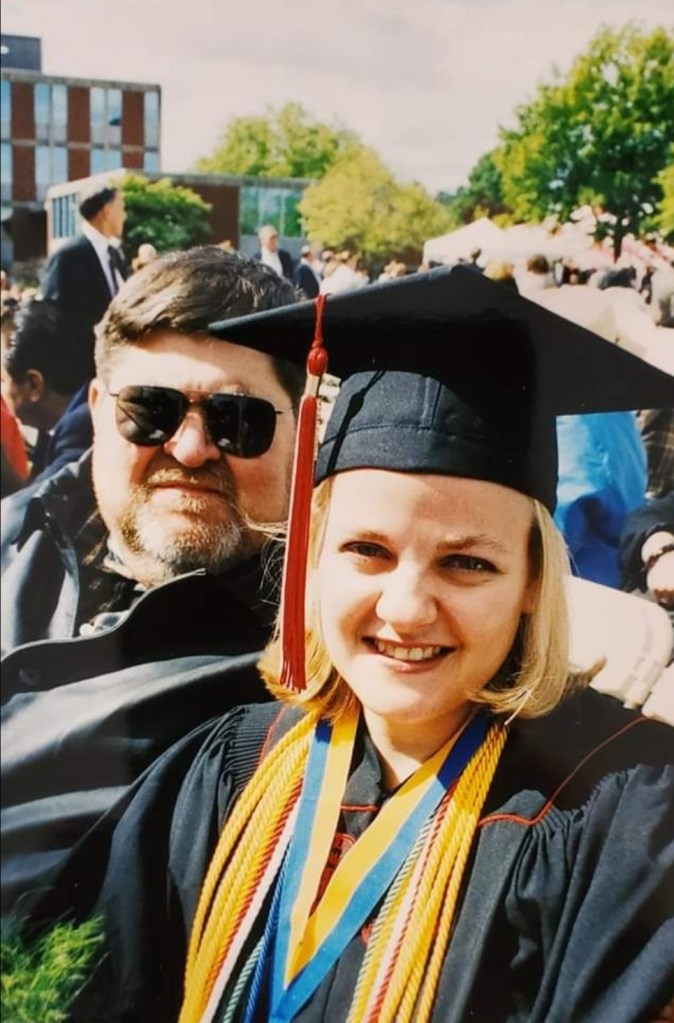
Today is Father’s Day, was Father’s Day, perhaps in my world. I say was because I’ve moved on from the most difficult part of this day – the painful moments when I allow myself to sit with the pain of knowing that my father is no longer with us. This pain comes with knowing he never saw me become a rabbi or even meet my children.

Through the years, I’ve watched on Father’s Day as people post pictures of or with their dads – some of them living and some of them gone. Some posted pics of their dad’s grave or wrote a tribute to them. I have made these sorts of posts myself in the past – as a way of honoring my dad, keeping his spirit alive and even gaining a little support when times were tough.

Still others on Father’s Day share their feelings publicly about how they yearn to be a dad.  Others celebrate being a bio-dad who gifted someone life without ever raising that child. I have yet to come across someone posting about how they never had a dad figure in their life. But I wonder what it is like for those children to experience Father’s Day and I name their experience, too – as well as the experience of their mother(s).

Today felt a little different to me than past Father’s Days without my dad. I think that’s because there is something reassuring, something comforting knowing that my brother is now a dad. That he, along with my new nephew, continues the legacy of our family name.

Today, while hunched over my kitchen sink, tackling the mundane of caked-on brownie debris and watching spoiled milk spiral down the drain, I realized the beauty – the power – in one generation shifting into the next, in knowing that somewhere a piece of my father is in us, in my children, in my nephew. As I rinsed off my dishes with these feelings, a cleansing feeling came over my thoughts, too – Father’s Day, today, did not feel as sad to me.

And then I heard a “random” song playing in my kitchen.

It was song about losing someone you love and how we can never truly get over these losses. Instantly, this sentiment really struck me at the core. There I was, just moments after feeling grateful, feeling “okay” on Father’s Day, finding myself now shedding tears.

Because…I’ll never fully get over you, Dad.

I’ve done grief counseling, been to therapy, and went to support groups for the loss of parents. I’ve journaled and processed my father’s death…to death. I’ve gone on retreats as I faced my grief head-on, breaking through wooden boards to crack open my heart with the hope that I would be healed. I’ve gotten to the point where I can laugh about my dad, recite prayers in his memory without shedding a single tear, talk about his death in a matter-of-fact way. And I can honestly say that I am healed.  

Until…I’m not.

I’m healed until a song comes on the radio that triggers me. I’m healed until I see his favorite bird and wonder why I’m meant to think of him in that moment. I’m healed until we celebrate a family occasion and feel slighted that he’s not with us to schep nachas, great pride, from my children.  

That’s the thing. Even when we sit with the loss and the grief and turn ourselves inside-out to the point where we feel pretty much healed, there are fleeting moments of grief when we think of our loved ones.

I think that’s the difference between being healthy and being healed.

We are never fully healed, even if we find ourselves in a healthy place. And part of being in that healthy place means to re-experience that grief or trauma at some point later on without having it overcome us completely this time. Having those feelings makes us human.  To envelope ourselves in these ephemeral moments means allowing our hearts to be moved, transformed and spoken to. And in the process, we create meaning and feel moved, if not, even touched, by our loved ones.

A dose of grief every now and then is healthy, is good for us, wakes us up every once in a while to re-connect with our loves ones. Like our dreams, these moments come and go and sometimes we are even sad when they end. But we also know that without the pain that comes with the loss of our loved one, we would never have been able to create some of our fondest memories and moments of joy. I, for one, would never trade one for the other.

Grief, even if fleeting, is a blessing. Because it means we’ve experienced a deep and eternal love that lasts forever.
The Rawness of Ritual

Around this time of year, I would always make my dad a Tandy Cake – his favorite – for his birthday. We would serve it cold – sometimes right out of the refrigerator or the freezer. He (and we) would love the combination of the crunchy layer of chocolate on top with the soft cake and peanut butter layer below. It’s the perfect mixture of sweet and savory. 

I realized that my father’s birthday is coming up – and therefore, it’s time to make the cake again. As you can imagine, this ritual of making his favorite cake brings me both joy and sadness.

In our Torah portion this week, Chukat, we learn about the seemingly-bizarre ritual of the red heifer. Moses and Aaron are instructed to slaughter it, mix its ashes with water, and use the ashes to purify the Israelites. At the same time, if a pure person touches these ashes, they become impure. 

How does that which makes the impure pure also make the pure impure? 

The Tandy Cake that I make each year brings me great joy. It makes me visualize my dad eating it. I can always hear his voice, know where he’s sitting and see his gracious smile, so thankful that I took the time to make it for him, to remember him. Now, I love watching my kids eat it. It’s a spiritual exercise of the generations – seeing him, experiencing him, loving him – through my children. It warms my heart to know that the same cake I once made for my father I now make for my kids and sometimes with my kids – but in memory of my dad. 

At the same time, making the cake breaks my heart. I miss him dearly. It reminds me of how my dad never got to meet my children, how they never got to meet him. Just as the cake is sweet and savory, this ritual of making this cake has become bittersweet to me – with tears and sadness, with joy and triumphant love. 

The red heifer brings purity to those who are impure and it makes those who are pure impure. The way in which this one ritual can transform different people in different ways encapsulates the essence of ritual itself. 

Ritual – the act of ritual – takes us to the core of our emotions. It makes us raw. It brings out our deepest feelings – both feelings of sorrow and loss, loneliness and emptiness, as well as feelings of elation, feelings of glory, feelings of love and pure, pure happiness. 

One ritual can tear at our heartstrings in both directions. One ritual can impact different people in different ways. My annual baking of the Tandy Cake reminds me that the rawness of this ritual is joyfully, sadly, beautifully real.

Three pints in two decades

The first time I donated blood, I passed out. That was nearly twenty years ago. I remember feeling light-headed before my body began to shiver intensely. The last thing I remember was the nurse rushing to cover me with blankets. I’m pretty sure I reached a full pint, but my day was definitely shot after that, as I found myself exhausted and pale.

Despite my desire to give blood, I was scared to donate after that. Where is the tipping point between self-sacrifice and self-protection?

But when you attend rabbinical school and a blood drive is right in front of you on-campus, clearly, it’s hard to say no. And so I tried again, about ten years later. With the support of a fellow student who kept me company by donating alongside me, I somehow got the courage to do it again for the second time. It wasn’t pretty, but I did it.

Since then, I’m on multiple blood donation registries. I get lots of reminders to donate. I’ve booked a good number of appointments. I answer all of the questions. But every time, my iron is always too low. Always.

Until today.

After the nurse, Janet, checked my temperature, pulse and blood pressure, then came the true moment – the finger prick.

“My iron is always too low,” I told her.

“Think positive,” she responded.

She put the test strip in the machine. I heard a beep, as I texted someone to tell them I’d meet them in five minutes. I was sure to get rejected again.

And then Janet said to me, “You’re iron’s great!”

Wait…what?

“You mean I can donate today?”

“Yes.”

I rejoiced and cried. For the first time in ten years, I could move on to the plastic blue donation chair.

There, I met a second nurse, Danny.

I told him I couldn’t believe it – I had finally passed the iron test again. Normally, I told him, I would get rejected, to which he responded: “You are never rejected, only deferred.”

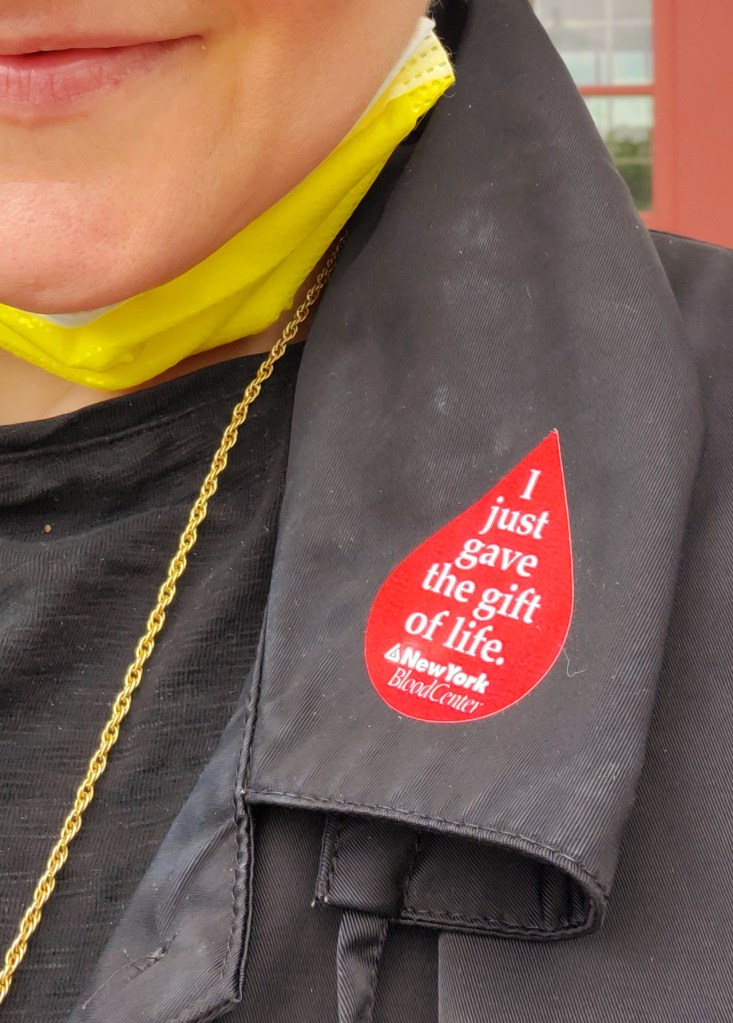
I warned Danny that I’m prone to passing out and getting very cold. He cleaned my arm with alcohol, covered me with a blue, fleece blanket, told me to start pumping my fist and kept me company the whole time. Ten minutes later, I had given the gift of life, one full pint of blood! 

As he bandaged me up, he said: “See you in two months.” 

Today is 6/13. There are 613 mitzvot, commandments, in the Torah. I can think of no better mitzvah to mark the day.

It has taken me two decades to donate three pints of blood. But I will continue to try, continue to be pricked and continue to register to donate, even if it will be another decade until I can donate a fourth pint.

Danny, I hope to see you in two months. In the meantime, maybe I’ll look into some iron supplements.

Thank God for 2021

New Year’s Eve 2022, as it would happen, would land on a Friday night, an evening in my house when we refrain from the use of screens in observance of Shabbat. When my daughter realized this, she was sad that she would not get to watch the Times Square ball drop. Would I give-in and make an exception? It felt so tempting and easy. Instead, I reassured her that I would do something special. I had no idea what that meant. I would have to figure it out later.

I decided that we would get some kosher Chinese, some sparkling grape juice which we would use to say the Shabbat blessings, some fun party decorations and hopefully a project that we would work on together as a family. We would either have a dress-up party or a pajama party and call it a night. Maybe my kids would outlast me.

Shortly thereafter, my friend and colleague posted: “How to Bring the Spirit of Shabbat Into Your New Year’s Eve Celebration” and I didn’t have to read far to use one of her tips to plan a photo review of our year. I would definitely print out some pictures and take a 2021 trip down memory lane. Thank you so much for this suggestion.

It was very difficult for me to narrow down my favorite photos. I confess; I printed about 150 of them.

Simultaneously, one of my friends on social media posted a question about what kind of year 2021 will be known for. As suspected, the comments mentioned politics, Covid and the like. But the frame of mind in which I was in, after having a difficult time narrowing down my favorite moments to 150 (!!!), had absolutely nothing to do with the January 6th insurrection or vaccination status. Instead I posted, after reviewing all of these photos, that I could not allow the tragedies of this past year to put a dampener on the joy that’s in my heart after the glorious year we’ve had together.

And so, in between courses of cocktail weenies and egg drop soup, we paused, together, to remember all of our fond memories over the past year. I asked each child to come up with their top 5 moments – which quickly turned to top 10 and eventually top 20. They couldn’t even narrow them down! Many of the moments were shared favorites. Some related to big trips, others were more ordinary moments, like playing in the snow or baking together. My God, let this appreciation last forever, I thought.

And then, after the most Ashkenazi dessert ever, I decided to add a twist to the photo exercise. I posted 12 pieces of cardstock on the wall, each with one name of a month of the year. The last part of this family game was to guess the months in which the moments happened and tape them onto the corresponding poster board.

I cannot tell you how I was in heaven watching this happen.

Here we are, in the middle of a pandemic – with the omicron surge hitting nearly every household around us – more than likely soon to hit us – and I was just so cocooned in a world of blessings and joy. My God, let this moment never end.

But it didn’t stop there. We sat back and took stock of this amazing year. We would ask ourselves:

“Which month was the busiest?”

“Which moments were the most precious?”

“When did we try something new?”

“When did we do a mitzvah?”

“Was there a moment when we were brave?”

And so soon, this photo wall became an opportunity to not just reminisce about the moments of our year, but the type of people we had become because of this year. We emerged more developed, more compassionate, holier beings, grateful, so deeply grateful, for how it had changed our lives.

I’m so glad that New Year’s Eve landed on Shabbat. It forced me to try something new, to use my creative brain to celebrate all that had transpired, to inspire my kids to look inward. And isn’t one theme of this year all about resilience, pivoting and trying new things outside of our comfort zones? Compared to the Times Square ball drop, this is just…everything. Maybe, just maybe, we’ve created a new annual ritual in our home, too.

I know that this year has been difficult for so many. I understand; trust me. Personally, though, I can honestly say that 2021 may very well have been the best year of my life. Not because of what has been happening around me, but because for the first time in my life I’ve embodied what it means – despite the chaos – to be joyful. And when it’s a pure state of joy, nothing, nobody – not even God – can take that away from me.

Once-in-a-Lifetime Moon Moments

My alarm woke me up early this morning. It was 4:00 am and I was ready to see the peak of the lunar eclipse. I stumbled out of bed, a little blurry-eyed. It was dark and cold in my room, but my fleece pajama pants kept me warm. I went downstairs, put on my boots and wondered to myself “Will it be too cloudy? Did I miss it? Is anyone else awake?” One thing was abundantly clear to me: I was definitely staying in my pajamas.

I threw my coat around me and grabbed my phone. I wasn’t sure I would get a good picture, but thought it couldn’t hurt to take it.

As I walked outside, I first noticed the stars in the sky. They twinkled and were a clue for me that indeed, it was probably not too cloudy. But where in the world was the moon? What a ridiculous question to even ask myself!

I remembered where it was the last time I saw it in the sky of my suburban world. I looked for it there. It wasn’t there. That’s interesting. I did a 360 and then…I saw it.

It was incredible.

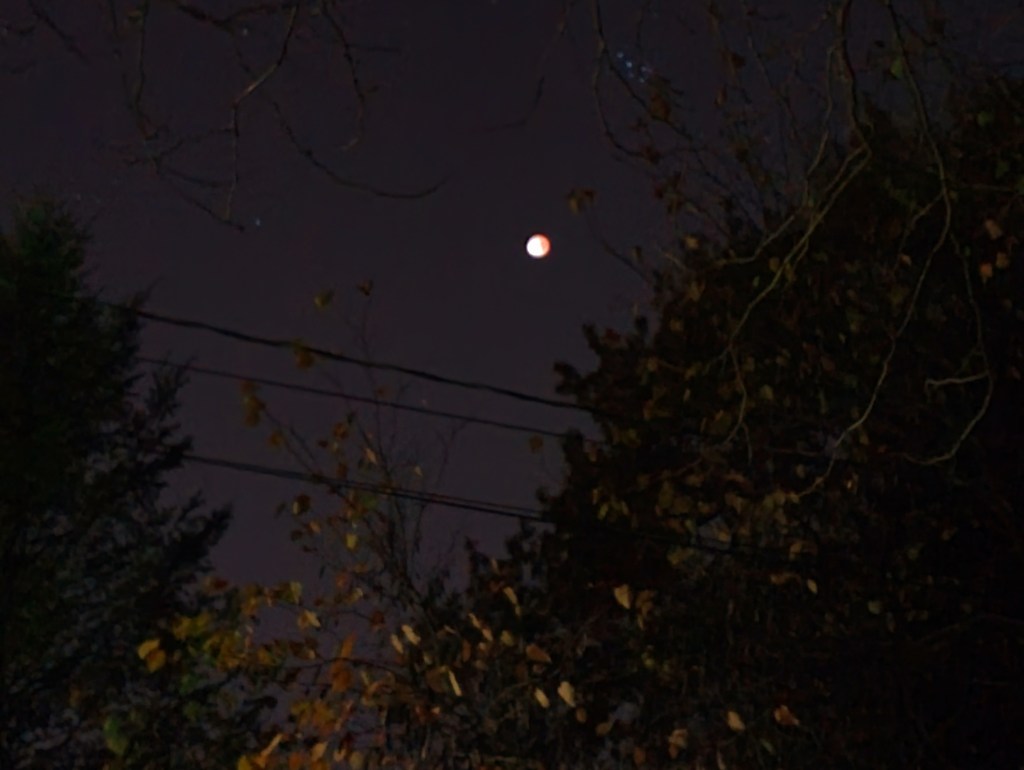
I could see the shadow that was being cast upon the moon. It was reddish/pinkish in color, at least to my human eye. When I went to take a picture, my camera automatically began suggesting I use “night mode,” which kept the shutter open on my camera for longer than I could hold still. I began getting frustrated with my camera, attempting to try various modes: with a flash, without a flash, zooming-in, zooming-out, selfie with the moon, video with the moon. And then I stopped myself. I could be missing a once-in-a-lifetime experience because I was too busy trying to capture it on film. (Did I just date myself by saying that?)

I put my cell phone in my pocket and just began to take it all in.

Although this moon was hundreds of thousands of miles away, ironically, through it, I felt closer with the rest of humanity. In that moment, the cells of my soul were bound up with the spirits of everyone else who would be watching this historical moment. I thought about others in town, who might be awake and outside. I thought about people across the states. I thought about my children. I thought about those I love – those still with me in body and those who are with me only in spirit.

A car drove by very slowly as I stood on the sidewalk in front of my house. Are they slowing down because they are worried about me being up so early? Do they think I’m drunk? Did they want to share in this very special moment with me? Would I invite these strangers to join me on the sidewalk? Do they even know this is happening? The car kept on driving and soon turned at the next intersection.

For sure, I thought to myself, there must be a Hebrew blessing we recite for a lunar eclipse. Admittedly, these things happen so infrequently, that I had to look up whether there was a blessing for this moment. Much to my dismay, there was no prescribed blessing for this eclipse, just general prayers for the wondrous aspects of nature. Even those prayers didn’t seem to capture the magnificence I was feeling.

I began to think about leaving the moon and going back inside. Despite my being alone, if I left, I would also be leaving the community of thousands who were joining me in this moment – whether in their front yards or on the streets of a busy city. I had a moment of sadness, but I was cold, so I walked back inside.

I grabbed my phone again and went on social media. Was anyone else posting about this moment? Was anyone else awake? Surely, there must be others who joined me in that moment. The connections were too strong.

Indeed, there were others who were up. We exchanged some words. And I told myself that it was time to go back to bed.

But then, a force even more powerful than the moon’s gravitational pull drew me back outside. I yearned for one more look. I wanted to just take it in again. I wanted to continue feeling the miraculous connection with others around the world. I wanted time to just stop for that one moment.

As I looked at the moon again, I began thinking about the next time this would happen. They say the year will be 2669. I thought about a woman, much like me, standing in the very spot where I stood, taking it in as well. Will this land still be occupied by a family? Will my house – and all of the memories in it – be bulldozed down to make space for a strip-mall? Will travel to the moon be so commonplace that this moment will not even matter? The thoughts seemed to upset me, but I pushed them aside and assured myself that someone – perhaps little girls like my children – would be looking at the same moon with the same awe. Those thoughts brought me great comfort as I got the courage to go back to bed – as sad as it was for me to say goodbye to the moon.

It was hard for me to fall back asleep. My hands were freezing at this point. As I attempted to warm-up and fall asleep, cognizant that there was no precise blessing for this moment, I began to instinctively chant these words to myself as I was dozing off:

מַה גָּדְלוּ מַעֲשיךָ ה’. מְאד עָמְקוּ מַחְשבתֶיךָ

How amazing are Your works, God, how subtle Your designs (Psalm 92).

We have been blessed with this once-in-lifetime experience. This marvel of the world has graced my life and connected me with so many others whose hearts stood with me in awe.

And then it hit me: we need not wait for another lunar eclipse to appreciate the power of any given moment.

Each day, each minute, I thought to myself, is a once-in-a-lifetime opportunity. Every day we wake up has given us a miracle. Every moment is like none other. It’s up to us to look at these moments with awe and gratitude. And we don’t even need the moon to remind us of that.

Re-charging my batteries

Heaven visited me on earth yesterday.

I received a message yesterday afternoon from a dear old friend. It was one of those GIFs circulating social media. The message encouraged women, now that the sun is setting earlier, to get AAA, park in well-lit areas and keep extra chargers with us at all times – among other safety tips. I quickly read over it and said to myself, “I’ve got AAA; I’m good!”

I didn’t realize it at the time, but this was God-sent sign #1.

I think the effects of this pandemic are finally catching up to me. I’ve had to offer pastoral support to far too many community members – adults, children, those with terminal illnesses and some with mental health diagnoses. I just finished a slew of fall holidays. I’ve buried two people in two days. All of this was on top of dealing with (Did I just say dealing with? I mean, experiencing the blessing of…) my children.

I decided I needed to relax last night. Should I call a friend to go out to dinner? Should I meet up with so-and-so at her house? And then I realized: what I really needed was a massage. It’s been about 19 months since I had one – the duration of the pandemic. I called ahead and asked if the massage therapist would wear a mask. Yes. And so I went for it – I would wear one, too. I played some meditative music on my headphones and…

Oh my God. I soooooooo needed that.

After my massage, I walked to my car feeling a lot lighter, freer. It was 9 pm. I would go home, shower, maybe watch a movie.

As I approached my car, I noticed a car parked behind me on the curb that caught my attention. It was a white van and looked eerily like my mother’s parts delivery car she uses to haul engines and other random car parts – part of the family business.

“Is Mom here?” I chuckled to myself. “How did she know where I was?” I looked at the license plate to make sure it wasn’t her. It wasn’t. It still made me feel like my mom was there and that felt nice. I didn’t realize it at the time, but this was God-sent sign #2.

I unlocked my car, got inside, and tried to start the car. It wouldn’t start. I immediately started laughing aloud. Of course this would happen to me after trying to relax! But I took it in stride and kept smiling and laughing. As I tried to start the car again, I had a hunch that it was not the battery. Nonetheless, I got out my portable battery pack with jumper cables – a gift from my brother that I keep in my glove box for an occasion like this.

I hooked it up to my battery and attempted to start the engine again.

Nothing.

I kept trying.

Still nothing.

A man who was walking by asked if I needed some help.

“It’s not starting,” I said.

I explained to him that I had this battery pack, but it still wasn’t starting the car. Perhaps the battery pack itself wasn’t charged enough? But honestly, I thought that it was the starter.

“Here, let me take a look,” he said. He looked under the hood.

“It’s corroded around your battery, let me clean that off for you.” The man then proceeded to go to the white van. The white van!

He was a man probably in his 60’s. The top of his head was bald, but he had long, gray hair that came below his ears on the sides and a salt-and-pepper mustache.

From his van, he took out some tools, a flashlight and a bottle of water and began cleaning my battery.

“I don’t think it is the battery,” I shared.

“Oh, no, this thing won’t start like this. I’ll clean it up for you and you’ll be going in no time.” He cleaned off the corroded part. “What’s your name?” he asked me.

“Jen.”

“Hi, Jen; I’m Gisha.”

“Nice to meet you, Gisha. Thank you so much for helping me. I really appreciate your time, but I can certainly call AAA.”

As I watched Gisha clean off my battery, I was instantly taken back to my father’s garage (May he rest in peace!). I saw – before my eyes – both the love that Gisha and the love that my dad put into my car. Gisha wiped down the corroded part, topped off the fluids, he made sure the connections were all there. Through that love, I began to shed a tear. It was as if my father was helping me.

I remembered how I held a flashlight for my dad while he fixed a car. Soon enough, I was doing that for Gisha, too. After he cleaned it all up, we tried to jump the car again. We realized that maybe the battery pack from my glove box was also low on a charge. He didn’t have normal jumper cables to jump me using his van. He said maybe it was time to call AAA.

And then I confessed to him.

“My phone is dead too.”

Gisha handed me his phone to call. When I finally got hold of a representative, she said I had to choose: Did I want a jump? Or did I need a tow? Seemed like the appropriate metaphor of questions for my day.

My gut told me I needed a tow. I really thought it was the starter.

But Gisha felt like my dad in that moment and so, of course, I asked him what he thought, much like I would always consult with my dad for things like this.

“I really think you just need a jump.”

“I’ll take a jump,” I told the representative reluctantly, never wanting to go against my father’s advice.

While we were waiting for AAA to show up (Gisha insisted on staying with me until they came), he started his white van and began charging both my phone and my portable battery jumper.

“I’d like to give you something for your time. I can’t tell you enough how much this means to me,” I said. “It’s been quite a day. I think I’m being sent a message here.”

He looked at me, refused any payment, and then, as if my father or even God was speaking to me said: “Jen, your car battery is dead, your car jumper battery is dead, your phone is dead. I think you need to slow down and get some rest.”

We shared AAA stories. I told him that I knew this white van was special. He laughed and started giving me more safety tips. “I have daughters,” he said. While a million people would scold me for accepting help from this stranger, I knew he cared. We shared our line of work. I asked if he was a religious man and so I blessed him.

AAA soon showed up, ran some diagnostics and tried to jump the car. Gisha asked what the tech’s name was.

“Joseph,” he said. Didn’t surprise me. Joseph was my grandfather.

At that point, I was cold and searched my car for any random coats that were left behind. I found my scarf and my daughter’s pink hooded sweatshirt. As I tried to zip up her sweatshirt, it clung to my biceps tightly and covered only above my belly button, but it still brought me warmth.

“Think my shoulders could fit in there, too?” Joseph joked with me. He must have been about 250 pounds. “You need a tow,” he said.

Gisha would not leave until he knew I had a plan for getting home safely. And when he did, he handed me a three pronged USB charger and said: “this might come in handy some day.” I told him I would repay him by sharing his kindness with others through a sermon or the like. He shared that we had something in common: “I’m Assyrian and I know Aramaic.” And then he blessed me in Aramaic: “Peace be upon you.”

“And also with you,” I responded.

The truck soon arrived – a Jerr-Dan flatbed – just like my father’s.

I instantly was a 6-year old playing with the levers on the truck. I always called it the “up-and-down truck.”

Travis towed my car to the shop.

And guess who picked me up and took me home? The very person I wanted to see earlier yesterday. Sometimes the stars align perfectly – even on a really difficult day.

Objectively speaking, I had a pretty rough day. But I went to bed feeling so grateful, so spiritual, so lucky to have had the most blessed and inspiring day.

After my shower, I found myself having a conversation with my father, z”l, may his memory be a blessing.

“Okay, dad, I hear you. I promise to start taking better care of myself.” And I laughed. And I cried. And it was a beautiful and sacred day I will never forget.

And when I got a call from the car shop this morning, I heard the very words that confirmed I should always trust my intuition:

“Your starter is dead. You need a new one.”

Heaven visited me on earth.

And my heart could not feel more joyous.

When joy collides with sadness…

It’s been a long time since I wrote just because. Just because I wanted to write and not because I needed to write for work or the local paper or or or

I like writing like this because it is the most raw and beautiful form of expression. Completely uninhibited. Even if I know you are reading this.

Doesn’t it feel liberating to be…yourself?

I’m a little overwhelmed with emotion right now. My kids are off to camp for the first time in two years. I’m back to my office after 16 months. And colliding with this joy and hope…Yes, that’s it! That’s why I’m so off.

My joy is colliding with my sadness.

Today is my sister’s yahrzeit, the anniversary of her passing. She’s been gone for 28 years. By now she should have been married, had children, been a successful accountant, everything she wanted. She died when she was 18. And even after all of this time, as resilient and hopeful as I try to be (try being the key word here), clearly, I’m still not over it. Are we ever?

We say “may her memory be a blessing.” We share those memories – even though it’s hard to remember them. (I was only 13 when it happened). We name our children after our loved ones. We give to charities in their memory. My sister played the flute in high school, so I donate to an organization that gives instruments to children in low-income families. Ooops, allow me to go do that right now…

Wow. I just went to their website. And there she was. A beautiful young girl (get this!): playing the flute. It’s like she’s playing it for me. It’s like I can hear her again, squeaky and off-key at first and then, oh so melodic and graceful.

What I would give for just one more note.

I grew up in an area with few Jewish families. When my father, z”l, was observing a yahrzeit for his father, z”l, he would have to “round-up” a minyan, a quorum of people, to recite the necessary prayers. He insisted on serving them breakfast or a meal. At first, he would make the eggs, platter the lox from the synagogue kitchen and then, as it became harder to stand on his feet, he would eventually invite everyone to meet at a local diner. Oh, to have one more diner meal with my dad! It was always a competition to see whose meal in the family was the cheapest. But never when it came to guests on his tab.

This morning I gathered with people on my deck: friends, friends like family, community members. And they joined me so I could say some prayers in memory of my sister. What I love so much about my tradition is that when we gather to do this, we don’t sit and weep, although that would certainly be okay. We gather together to pray. To connect. To support. To go to another place.

As a spiritual leader, I’ve been guiding my community through this pandemic. Instead of praying towards Jerusalem as we would while praying in-person, I prayed towards my screen. Finding some way of connecting, rejoicing, and dancing from the privacy of our own homes seemed to test my creativity, stamina, and spiritual truth.

But screens cannot replace touch. An embrace. Just plain being in someone’s physical presence. What I would give, sometimes, to just hug someone through the screen.

This morning, on my deck, in the 84-degree heat others buoyed me up. Because when joy meets sadness, we embrace the beauty and glory of the moment, our God-given ability to connect with others, to lend a tender and supportive space and place for a moment of sanctity.

But before people came to support me, I was alone with my kids. In the midst of getting them ready for day camp, I had them join me as I lit a candle in memory of my sister, their aunt. I brought out Michelle’s high school graduation picture, one of the last ones we had of her before she passed. It’s been in the same frame for years. It’s gone to college with me, moved with me all over the country and world, and today it sat right in front of my daughters as they ate warm bagels (one everything, one blueberry) from the smeary granite countertop.

My 5-year old, who has never even met my sister, looked at the picture and said in the sweetest voice: “I miss Aunt Michelle.”

My heart melted.

Oh, to miss someone we haven’t even met in this lifetime.

Before I knew it, the kids were back home, as they enthusiastically shared the details of their day at camp. They wanted to know how my day was. And, perhaps more importantly, whether I had any leftovers from the breakfast I served at morning minyan on my deck.

“Of course I have leftovers. We’ve got bagels and lox and deviled eggs, cookies and cheese danish and so much more.”

Their eyes lit up. They looked at each other. I knew they had a plan.

“Let’s have a party!” They said together.

And so we did. Off they went to set the table, select the dishes, put the food out, and arrange cloth napkins in perfectly long circular rings. Before I could blink, one put fake flowers with a faux butterfly into a translucent vase to add to the festivities, trying to sneak in some cream cheese with her thumb.

For a moment, I remembered when I was gathering platters this morning to use on my deck. I said “no” to the cupcake one, to the one with balloons – those platters should not be used at such a solemn occasion.

But here they were, throwing a party on the afternoon of my sister’s yahrzeit. And they didn’t even know that tomorrow would be her actual birthday.

When sadness meets joy, we welcome, we marvel, we lift up that joy as if it’s the only thing we’ve got.

Even leftovers can be turned into a party.

By myself, but not alone

On Monday, I had surgery. It was on my foot – no big deal. Or so I thought.

Despite being prepared during this pandemic that no one would be waiting for me in the waiting room and that no one would be allowed to walk me in or out of the hospital (or shall I say “hobble” out of the hospital), I was really unprepared for how much I felt alone during what seemed like a fairly routine surgery. And, I know I had it easy compared with so many others before me.

When I think about people dying alone, mothers giving birth alone, loved ones experiencing great pain and illness without being able to speak or see their family, that is great pain. That is loneliness. And those were the most difficult stories that I heard during this pandemic. Devastating. And me? I would be in and out of the hospital in only a few short hours. Who was I to complain about being lonely?

But I was.

After walking through eerily empty hallways and infrared temperature checks, I eventually found my way to the operating room area. I got into my hospital bed, fully masked and nervous to be sedated. In between my frantic last minute texts to friends and family (please, say prayers for me!), a petite and kind nurse started to ask me questions about my health history. I paused and asked for her name. “Michelle” she said. “One “L” or two?” I asked. “Two.” And I immediately started to cry.

Michelle looked at me and said, “please, tell me why you are crying.” I explained to her that it’s scary to go through something like this alone, but Michelle (with two “Ls”) was the name of my sister, who passed away decades ago. Somehow, instantly, I didn’t feel so alone. The nurse got it and was deeply touched that she filled that emptiness for me. She said under normal circumstances she would give me a hug, but, she couldn’t. Honestly, she didn’t need to. I felt so protected and cared for, just knowing that somehow, somewhere, my sister was with me. Michelle would take care of me.

“Will you be with me in the OR, Michelle?” “Yes, sweetie.” She called me “sweetie” as if I was her junior, even though I was sure I had a least a decade on her. There was comfort in knowing that Michelle would be by my side.

As I lie in the hospital bed, different people gradually opened the curtain to say hello to me and ask me to sign my life away. I met with the anesthesiologist, several surgeons, some aides, some more doctors and nurses, all of whom would be with me in the OR. We probably had at least a minyan taking care of me.

And, as it goes, before I knew it, I woke up and my surgery was over. As they were pushing me on the gurney, I thanked everyone and asked the crew if I could buy them lunch as a token of my appreciation. It was 4 o’clock. My doctor met me in the recovery room and showed me how to wear my new, fashionable boot. As he velcroed the pieces together and gave me instructions on wearing it, I started spacing out – and not because of the anesthesia.

I was instantly taken back to middle school, high school maybe. My father, of blessed memory, had four (or was it five? I’m embarrassed that I don’t know…) toes removed after various other medical complications. He wore custom-made boots for as long as I can remember. I remember helping my dad put on his boots, with plastic-like braces that stretched up around his calves, sometimes leaving marks as if they cut off his already-poor diabetic circulation. I remember tightening his laces and as a young, bratty child sometimes complaining about how long it would take to do this sometimes every morning. I feel horrible admitting that now.

I stared at my new boot and immediately felt empathy for my dad. If he suffered for years in his boots, I could handle one month. I remembered making sure the tongues of his boots were in the correct position and how his customized insoles were properly in place. I remembered how his laces would sometimes break after hanging on by only a thread. I remembered how difficult it was to get the length of each side of the laces correct because if one was too long, the other side was too short. Putting on my boot brought me back to my father. He was instantly there with me too, helping me recover.

“Do I wear my boot while sleeping?” I asked my doc.

“You can, some people like to do that for more support.”

If this boot brings me closer to my father, you better believe I’m wearing it to bed for more support.

No one walked me into the hospital or sat in the waiting room eager to hear how my procedure went.

Although I was by myself, though, I was far from being alone.

Michelle, Dad: thanks for being there by my side when no one else could.


Mini Pretzels & Cheesy Whale Crackers

One of the things that I loathe about my Passover cleaning is cleaning my kids’ car seats. If there is one place that is a leavened product-magnet it is my kids’ car seats. Whether it is Popcorners, or rice cakes or a bagel on-the-go, it seems that those things can never get cleaned. Without Passover, their seats might always be gross. Are you with me?

So the other day, after removing all of the padding and shifting the buckles and straps, as I was vacuuming their car seats outside on a beautiful, warm day, I saw a half of a mini pretzel and a cheesy whale cracker stuck in a tiny crevice of the little one’s seat. Lovely.

But no problem here because…

My mom just won a new Dirt Devil as a door prize and she passed on her winnings to me, just in time for Passover.  (Thanks, Mom).  I took out the smallest attachment and put it on the vacuum. I was excited to suck up the food pieces with it.

dirt devil

But no such luck.

Even the smallest vacuum attachment could not reach those pieces of hametz, leavened snacks.

I immediately began to worry. How would I sleep at night during Passover knowing that a half of a mini pretzel and a cheesy whale cracker was stuck in her car seat? Would my declaring all of my leavened products like dust in the earth be good enough when these snacks were much larger than a speck of dust? Since I cannot own leavened products on Passover, would my temporary selling of it to someone who was not Jewish satisfy, even though I can see it?

I tried to get it with my fingers. Nothing. Maybe my small pinky? Nope.  That didn’t work either. I ran inside to get a handful of Q-tips. Surely that would do the trick. But even the Q-tip could not dislodge the hametz from its hiding spot.

The fact that I was so concerned about this made me feel – for a slight second – righteous, as if God saw my determination as even a little bit worthy. Do I get an “A” for effort?

I moved to my other daughter’s car seat, as if taking a break to clean the second car seat would loosen the hametz from the crevice of the first one. It didn’t. Because after cleaning the second seat, the half of mini pretzel and cheesy whale cracker were still there in the first one.

I became frustrated and so I decided to bang on the side of the car seat, as if to use force to dislodge the hametz. I thought of my kids singing “Bang, bang, bang, dig your hammers low…” – that kids’ Passover song that describes the slaves in Egypt. But the banging didn’t work either. And then, in a last ditch effort, I decided to do something a little different. I turned over the car seat and shook it a bit. And then…out popped the half of a mini pretzel and cheesy whale cracker onto the blacktop of my driveway. Uh-mazing!

I took a moment to celebrate and then I paused to think about my methodology in getting it out.

I had been pushing and pulling, picking and prying at those things, all to no avail. I had used all sorts of instruments to suck it out, pull it out, and poke it out. And then, when I finally took a completely different approach – turning the entire car seat upside down, something finally shifted – and it didn’t even happen by force.

Isn’t that true of life, too?

I instantly thought about areas of my life where I tried to control, force, or push my own agenda, thoughts, feelings and hopes. Sometimes this was at the detriment of my family members or my co-workers, and other times, I realized that I was the only one that lost out.

Sometimes to get rid of the hametz, of that which bogs us down in life, we have to shift our perspective or our understanding. Sometimes to remove the schmootz, the goop of our lives, or to move on from a problem, we just have to see it with new eyes, or try not to force that which cannot be pushed.

And when we do that, we are blessed with showers of mini pretzels and cheesy whale crackers that pop out, completely on their own.

Isn’t it amazing how things just fall into place when we don’t try to force them?


There was a time when I would cry over spilled milk.

There was a time when I would cry over spilled milk.

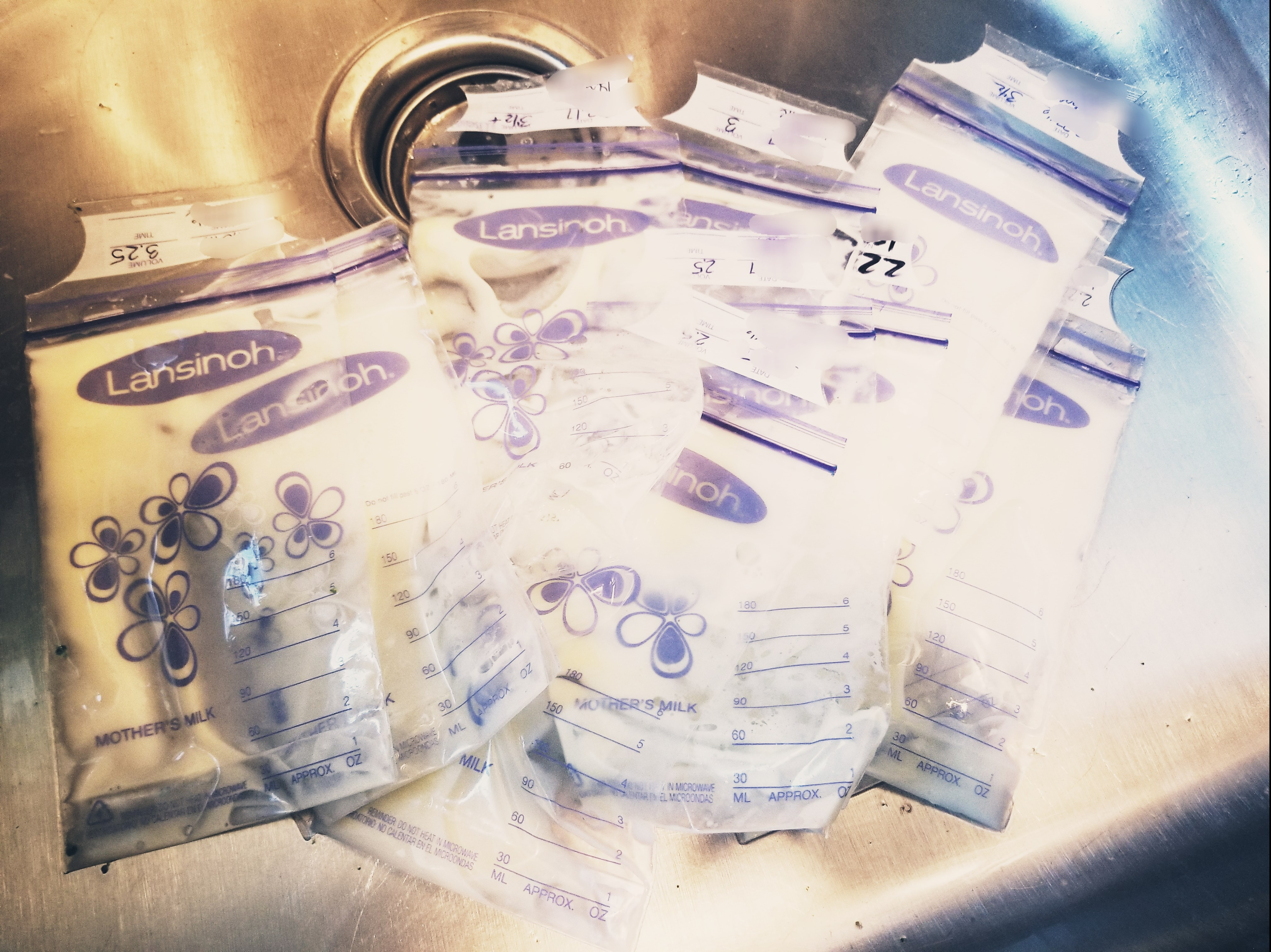
I remember the time when I literally cried after pumping breast milk for dozens of minutes, only to spill the entire bottle on the plastic, laminate countertops of my then-Long Island home. Even though I was blessed with enough milk to donate to babies in the NICU – and I needed to purchase a large storage freezer for the sole purpose of storing my milk – those mere eight ounces of breast milk felt like gold to me.

Or there were the times when I would get my kids ready for bed at night, pouring milk into their sippy cups and accidentally knocking the cups over before I sealed them. Somehow, at the end of a long day with two young children, this would push me over the edge. I would cry over spilled milk.

And then there were times when the spilled milk of my life was dumped in other ways – like the times I lost sleep at night over something that happened at work or the time when I internalized, while still nursing baby, that I would soon be a single mom.

With Passover soon upon us, I just began my lengthy to-do list of my pre-Passover insanity. This year, because my head happened to be in my storage freezer searching for frozen bagels to consume (or rather, to feed to my kids), I found a bag of random stuff. When I opened the bag, I noticed two items inside: frozen cheesecake from last Shavuot (I know) and plastic bags of pumped breast milk. I looked at the dates on the breast milk bags. They were two years old. This means that I didn’t get rid of them last Passover.

It doesn’t surprise me that I didn’t throw them out last year. Back then, I was still hanging onto the baggage in my life – the stressors of work and single parenthood, the woes of relationships, the pain of one more loss. And although I believe that muddling through our pain is the best way to get beyond it, at least back then, dumping my expired breast milk down the drain just felt like one more loss and one more dream unfulfilled. They would stay in the freezer next to the frozen corned beef.

I thought I would always have at least three kids. Then life happened. Needless to say, it was difficult for me to stop nursing my second child. As beautiful as it was to see her become more self-sufficient, I enjoyed the bonding, the comfort and our time together. Selfish, I know, but I did not want it to end, especially knowing that she might be my last.

When I stopped nursing my baby, I began finding other ways of clinging on to my dream of another child. I kept every article of clothing, all the baby toys and even my pumping parts, should I be blessed with another pregnancy at some point.

But one day, in the middle of a yoga session, I realized that I already had everything I needed.

Before I was a mom, like Hannah in the Bible, I found myself praying for a child. After years of infertility, countless rounds of fertility injections and IVF, I would finally have a baby. And then, years later, another. I was blessed with not one, but two healthy children.

Just last night my daughter said to me, “Mommy, do you like being a rabbi?”

“Yes, honey. I love being a rabbi.”

“But do you love being a Mommy even more?” she asked, with a slight reservation in her tone.

“Yes, dear. I love you two more than anything else in the whole, wide world.”

And the truth is, isn’t that enough?

Two nights ago, I put my old breastmilk on the counter to thaw and just last night I poured it down the drain. I didn’t even shed a tear. As I looked at the golden milk swirling around my stainless-steel sink, I noticed residual pieces of soggy broccoli from last night’s dinner. The juxtaposition of the leftover food and my milk was powerful, as the green residue enveloped my milk with a mundane sanctity.

breast milk down the drain

“It’s just spilled milk,” I told myself.

And then, I moved on.

This year, as I continue my Passover to-do list, I’m feeling a bit freer than last. I’m free of the “should-be’s” and “must-haves.” I’m learning to live with the spoils of the spilled milk of my life. In fact, in addition to getting rid of my hametz, my leavened food, I’m also ridding my home of bags of baby clothes and heaps of toddler toys. I will drop them off at a local women and children’s shelter, where my hametz will be someone else’s treasure.

Sometimes pouring your own milk down the drain is a deeply liberating feeling.